Hamza Sajjad

Introduction: Why Pug Eye Health Matters
Pugs are beloved for their expressive, bulging eyes, but this unique feature makes them prone to various eye problems. As a brachycephalic (short-faced) breed, Pugs have shallow eye sockets, leaving their eyes more exposed to injuries, infections, and genetic conditions. Recognizing the signs of eye problems in Pugs early can prevent severe complications, including blindness.
This in-depth guide covers everything you need to know—from common Pug eye conditions to symptoms, treatments, and prevention tips—ensuring your furry friend stays happy and healthy.
Common Eye Problems in Pugs
Pugs are susceptible to several eye-related issues due to their facial structure. Here are the most frequent conditions:
1. Dry Eye (Keratoconjunctivitis Sicca – KCS)
-
Cause: Insufficient tear production.
-
Symptoms:
-
Red, irritated eyes
-
Thick, yellowish discharge
-
Frequent blinking or pawing at eyes
-
-
Treatment: Artificial tears, immunosuppressant eye drops (like Cyclosporine).
2. Corneal Ulcers
-
Cause: Scratches, trauma, or infections.
-
Symptoms:
-
Cloudy or hazy cornea
-
Excessive tearing
-
Squinting or keeping the eye closed
-
-
Treatment: Antibiotic drops, protective collars, or surgery in severe cases.
3. Cherry Eye (Prolapsed Gland of the Third Eyelid)
-
Cause: Weak connective tissue in the eyelid.
-
Symptoms:
-
Red, swollen mass in the corner of the eye
-
Discomfort and rubbing
-
-
Treatment: Surgical repositioning or removal (though removal can lead to dry eye).
4. Entropion
-
Cause: Eyelids rolling inward, irritating the cornea.
-
Symptoms:
-
Excessive tearing
-
Eye redness
-
Corneal scarring if untreated
-
-
Treatment: Surgical correction to reposition the eyelid.
5. Progressive Retinal Atrophy (PRA)
-
Cause: Genetic degeneration of the retina.
-
Symptoms:
-
Night blindness (early sign)
-
Dilated pupils
-
Complete vision loss over time
-
-
Treatment: No cure, but antioxidants may slow progression.
6. Pigmentary Keratitis
-
Cause: Chronic irritation leading to pigment deposits on the cornea.
-
Symptoms:
-
Brown or black spots on the eye
-
Reduced vision if severe
-
-
Treatment: Addressing underlying causes (e.g., dry eye, entropion).
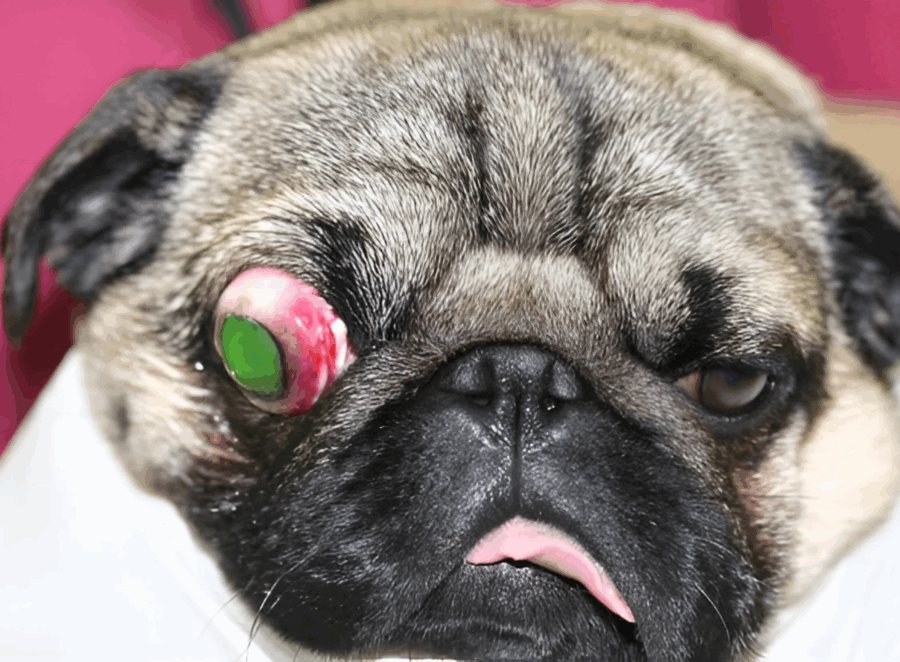
Early Warning Signs of Eye Problems in Pugs
Spotting issues early can save your Pug’s vision. Watch for these key symptoms:
Excessive Tearing or Discharge – Clear, mucus-like, or pus-filled.
Redness or Swelling – Inflamed conjunctiva or eyelids.
Cloudiness or Change in Eye Color – Indicates ulcers or cataracts.
Squinting or Light Sensitivity – Pain or discomfort.
Rubbing or Pawing at Eyes – Sign of irritation.
Visible Third Eyelid – Could indicate cherry eye or illness.
Bumping into Objects – Suggests vision loss.
How to Prevent Eye Problems in Pugs
While some conditions are genetic, proactive care can minimize risks:
1. Regular Eye Cleaning
-
Use a vet-approved saline solution to wipe away debris.
-
Avoid using human eye drops unless prescribed.
2. Protect from Trauma
-
Keep nails trimmed to prevent accidental scratches.
-
Use dog goggles (like Doggles) for outdoor adventures.
3. Balanced Diet & Supplements
-
Omega-3 fatty acids support eye health.
-
Antioxidants (Vitamin A, E) help prevent retinal issues.
4. Routine Vet Checkups
-
Annual eye exams catch problems early.
-
Genetic testing for PRA in breeding Pugs.
When to See a Vet Immediately
Some symptoms require urgent veterinary attention:
Sudden blindness or severe cloudiness
Deep corneal ulcers (visible pits or holes)
Blood in the eye (hyphema)
Bulging eye (possible glaucoma or proptosis)
Delaying treatment can lead to permanent damage—always err on the side of caution.
Final Thoughts: Protecting Your Pug’s Vision
Pugs’ eyes are their most charming—and vulnerable—feature. By knowing the signs of eye problems in Pugs, you can act fast and safeguard their sight. Regular cleaning, vet visits, and prompt treatment of abnormalities will keep those big, loving eyes bright and healthy for years.
Need Expert Advice?
If your Pug shows any concerning symptoms, consult a veterinary ophthalmologist immediately. Early intervention is the key to preventing long-term damage.