Dr. Huzaifa Shayan (Veterinarian/ Deep Researcher)
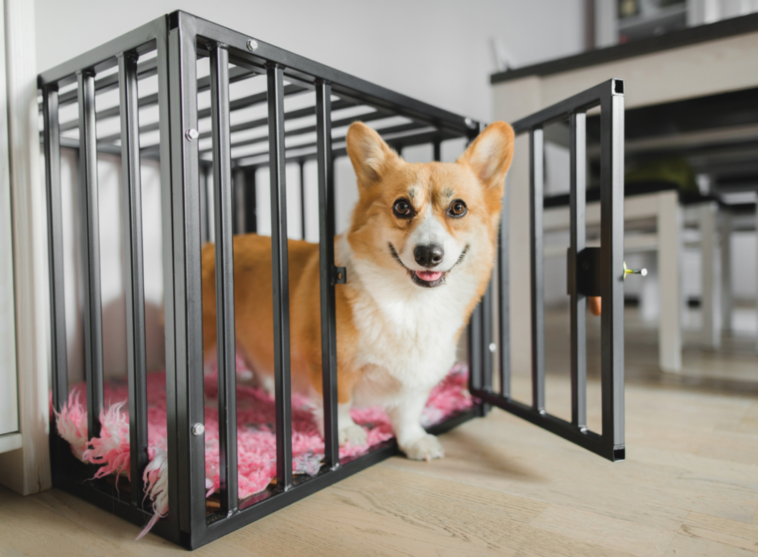
Puppy Crate Size Calculator – Never Buy the Wrong Size Again.
It is a thrilling memory when you bring home a new puppy, but then you find out that the crate you ordered is too big your puppy seems lost in the box, or so small he can hardly turn around in it. Choosing the puppy crate size incorrectly is a frequent (and expensive) error of first-time dog owners. This instructional manual shows how precisely to size a crate, how to make it work, and how to ensure crate training is as easy as possible – on the first day and during adolescence.Why Crate Size is a Bigger Issue Than You Imagine?
A cage is not a penalties but that of a home. Dogs are den animals and a crated properly sized cage can exploit that instinct giving your puppy a safe and cozy room of their own. Too big: You will have a puppy that will use one corner as a bathroom and the other as a sleeping space, which completely goes against the main idea of puppy training in a crate that states that dogs do not like to dirty their sleeping areas. Too small: Your puppy is unable to stand, turn around or lie down in a comfortable position and that is the cause of stress and undermines the reason of the crate as a safe haven. It is very easy to get size correct the first time which simplifies everything further such as puppy training in the night when using the cage.The Puppy Crate Size Calculator: A Step-by-Step.
You do not have to use an application or a special tool. To follow these two measures:Step 1 — Measure Your Puppy
Measurement:Measured up until their nose to the tail (not the tip) Height: The distance between the ground and the top of his or her head or ears, whichever is higher.Step 2 — Add the Magic Numbers
Increase the measurement of the length by 4 inches. Measurement of height increase by 2-4 inches. The latter is the minimum number of crates. To take an example, when your puppy is 18 inches in length and 14 inches in height, a minimum size will be 22 by 1618 inches long/high.Quick Reference Guide by Breed Size
| Dog Size | Estimated Adult Weight | Recommended Crate Size |
|---|---|---|
| Extra Small | Under 10 lbs | 18″–22″ |
| Small | 10–25 lbs | 24″–30″ |
| Medium | 25–50 lbs | 30″–36″ |
| Large | 50–90 lbs | 42″–48″ |
| Extra Large | 90+ lbs | 54″–72″ |
Pro Tip: If you own a small puppy crate for a toy breed like a Havanese, keep in mind that even small dogs need just enough space to be comfortable without excess room. The famous “Havanese puppy crate hop” — where these tiny dogs bounce excitedly in their crates — is cute, but it’s also a sign they need proper enrichment, not just more space.
Adult Dog vs. Right Now Dog Buying
The question here consists of the dilemma: is it better to purchase a crate of the current size of your puppy or the size of an adult one? The clever solution: Have them purchase as big as they are in adult size, but put a divider panel to make a separation of the area. The ability to adjust the dividers of quality crates is precisely the reason why most of them are sold with adjustable dividers. The divider can be moved back all you need to do is move as your puppy grows. This will save you money and you do not have to purchase several crates as your dog develops.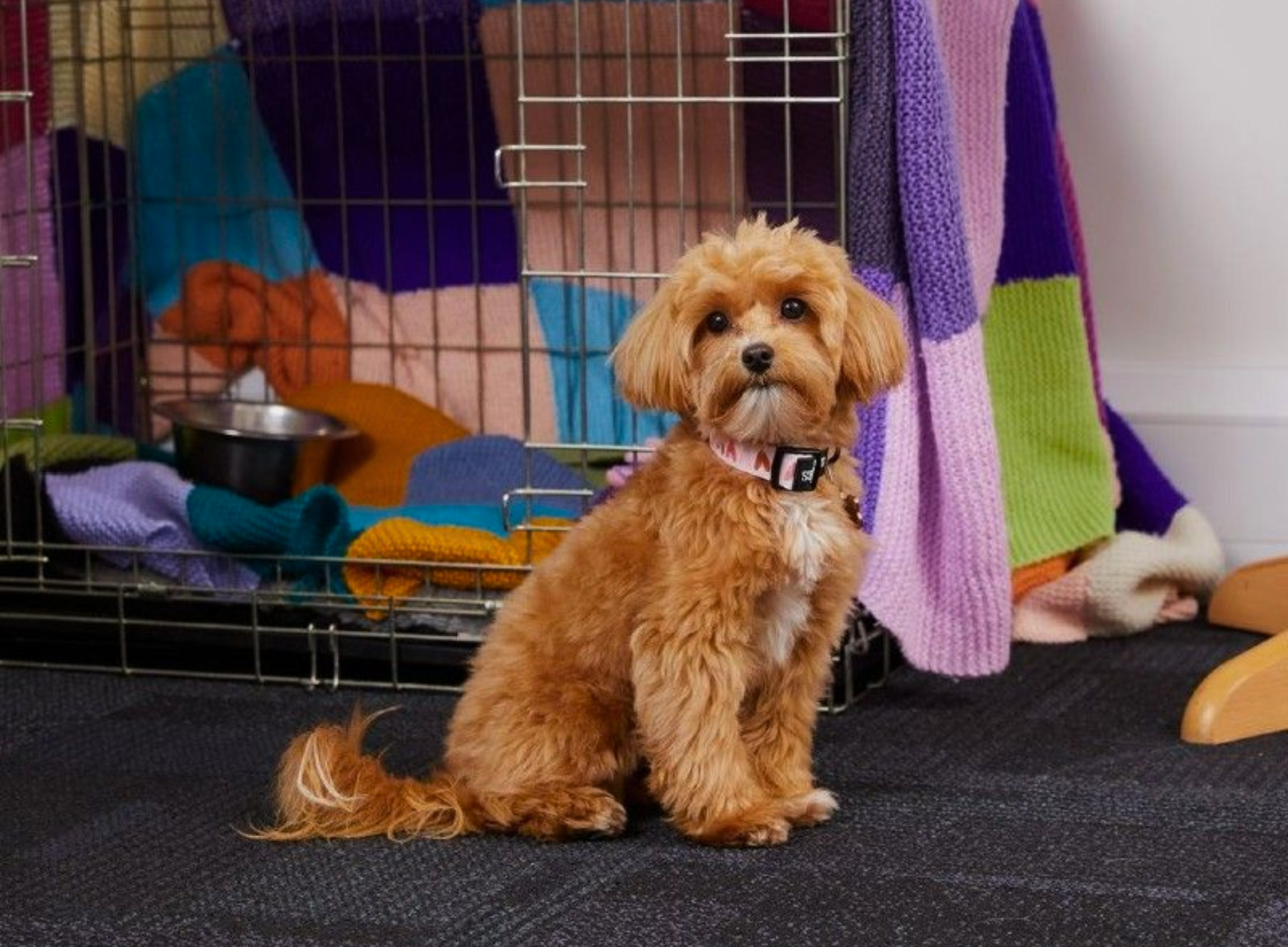
The Ultimate Guide to Preparing a Puppy Crate
Puppy Crate Set Up Checklist
When it gets to the right size, it is then properly put together that will make your dog willing to use it.- Location: Put the crate in one of the bustling places of the house living room or bedroom; this way your puppy does not feel like alone.
- Bedding: Soft puppy crate bed or a flat blanket should be an effective choice; it is not possible to use thick bedding with immature puppies who are still not trained to go to toilet.
- Cover it: A blanket or towel should be placed across three sides to ensure that it is like a den.
- Bring something to be calmed down: Something of your tattered garment will soothe scared puppies.
- Chew safe toys: A stuffed KONG or a safe chew toy keeps them busy.
What to Put in a Puppy Crate
Many owners overthink this. Keep it simple:- A flat or puppy crate bed (it needs to be washable).
- One or two chew-safe toys
- Long stay water attachment clip
- A tattered T-shirt or blanket of your perfume.
What should be put in Puppy Crate at Night.
Most owners have difficulties during the nighttime. To reduce anxiety and crying:- Bring on a ticking clock or heartbeat toy to imitate a littermate.
- Put the crate next to your bed so that your puppy can hear as well as smell you.
- Go hungry or thirsty before sleep to minimize night time accidents.
- Cover the box in order to minimize visual stimulation.
Puppy Crate Training: Step by Step Technique
The Puppy: How to Train to Crate on the First Day
- Day 1-3: Then leave the door of the crate open and allow your puppy to explore the crate in a free manner. Toss treats inside. Don’t force anything.
- Day 4-7: The meals are fed inside the crate with the door open and then a momentarily closed.
- Week 2: Start closing the door as long as you are in the room even briefly. Gradually extend the time.
- Week 3+: Train to leave one that is exercised to leave the room at the time that your puppy is in the crate.
Puppy Crate Training Schedule (By Age)
A structured puppy crate training schedule is essential. Puppies can hold their bladder for roughly one hour per month of age.
4-Month-Old Puppy Crate Training Schedule
| Time | Activity |
|---|---|
| 7:00 AM | Wake up, immediate outdoor potty break |
| 7:15 AM | Breakfast in or near crate |
| 7:45 AM | Play and supervised exploration |
| 9:00 AM | Crate nap (1.5–2 hours) |
| 11:00 AM | Potty break + play |
| 12:30 PM | Crate nap |
| 2:30 PM | Potty break + training session |
| 4:00 PM | Crate rest |
| 5:30 PM | Dinner + outdoor time |
| 7:00 PM | Calm play and socialization |
| 9:00 PM | Final potty break |
| 9:30 PM | Bedtime in crate |
Puppy Crate Training at night: Making it through the First Weeks
The most common experience is nighttime crate training where most people surrender. Your puppy wails, you succumb and the next thing you know they are in your bed forever. This is the way to take the line without being mean:- Expect 3-7 nights of crying. This is typical adjustment behavior.
- Don’t rush in immediately. After 2-3 minutes, wait whether they settle themselves.
- In case they continue crying, bring out and take them on a silent dull potty walk, no playno praiseback in the crate.
- Do not talk or look at eyes during night time potty breaks. Keep it strictly functional.
How to cope with Puppy Crate Training Crying
Crying may signify a number of things; it may be an aspect of anxiety, a need to urinate, or just an instinct because it was rewarded with attention. First, it is necessary to rule out the need, and then to ignore attention-seeking crying at all times. Consistency wins every time.Furniture and Aesthetic Options Crate Furniture.
In case a wire crate conflicts with your house decor, you do not have to be stuck there. Puppy crates furniture – The new wooden end tables and console crates in the forms of crates have become commonplace and are found to resemble real furniture. They also work like any other typical crate but they can easily integrate in your living room. Only make sure that any furniture-like boysen contains an acceptable amount of ventilation and is sizable enough to suit any puppy before you start thinking about appearance.Common Mistakes to Avoid
- Purchasing excessively big to save: Big crates remove the need of a divider, which promotes the use of the bathroom inside.
- Sticking with the crate in an extended period: Puppies less than six months of age should not be in the crate longer than 3-4 hours in a day.
- Taking a puppy out when he is crying: This makes them learn that crying = freedom.
- Owing to the absence of the gradual introduction: Putting a puppy in a cage on the first day and shutting down the door will provoke anxiety forever.
- Disregarding the viral trends out of context: In case you have watched a dog and puppy crate
- Tik Tok video that proposes some shortcuts or hacks: make sure that a certified trainer has confirmed the direction to you first and that the content on the social media is not always supported by behavioral science.
Advice of Professional Trainers
Whenever your puppy gets in use a cue word such as a crate or even a bed. They will connect the action with the word in a short period of time. Practice “happy exits.” Open the crate door randomly in the middle of the session, so that your puppy will know that you can open the door not necessarily such a big deal. Turn around toys in order to make the crate look fresh and interactive. Track your schedule. The more regularity you have the quicker your puppy learns what is required.