Hamza Sajjad

Pugs as Therapy Dogs for Humans: Small Breeds with a Large Mission
The typical picture of a therapy dog is a big breed, such as a Golden Retriever. But the pint-sized, charming pug is quietly marching into the limelight as an outstanding therapy pet. These tiny dogs bring great emotional comfort with their special combination of companionship, intuition, and charm. Their physical size, calm temperament, and intensely affectionate personality make them the ideal candidates for therapy work in hospitals, schools, nursing homes, and homes. This article examines the unique characteristics that allow pugs to excel as therapy dogs and the true advantages they bring to individuals in need.
What Makes Pugs Exceptional Therapy Dogs?
Pugs have a mix of inherent characteristics and physical features that combine perfectly with the needs of therapy work.
Their Smallness is a Perk. Pugs, in contrast to larger dogs, are small and lightweight. They fit snugly on the lap of a patient, on the armrest beside someone sitting in a chair, or are easily picked up without exertion. This renders them less formidable, particularly around kids or old people, and enables them to work without strain in tight spaces such as hospital rooms or classrooms.
They Have a Predictably Gentle Temperament. The American Kennel Club characterizes the pug as “even-tempered and charming.” They generally exhibit a stable, predictable demeanor important for therapy settings. Pugs are infrequently aggressive or uptight; rather, they exude a calm and accommodating presence that makes individuals feel comfortable.
They Need Human Contact. Pugs are what are referred to as “shadow” or “velcro” dogs because they bond very strongly with their owners and easily give this love to strangers. Their natural need to be near humans makes them go out of their way to interact and live off attention, which is a basic necessity for a therapy animal.
Their Expression Brings Joy. A pug’s facial comicality—with its big, expressive eyes, creased forehead, and curled tail—naturally provokes smiles and giggles. Such lightness can thaw ice, ease nerves, and form a spontaneous point of connection and merriment among individuals confronted with stress, illness, or isolation.
The Pug Therapy’s Concrete Perks
A therapy pug’s work is more than just benevolent companionship; it brings quantifiable psychological and physiological benefits.
- Decreasing Stress and Anxiety. Playing with a relaxed pug can decrease cortisol levels (the stress hormone) and decrease blood pressure. The basic, repetitive motion of stroking a dog provides a tactile comfort that can decrease panic attacks and alleviate anxiety feelings.
- Combatting Depression and Loneliness. For long-term care facility residents or those who live alone, a pug visit offers essential social contact and unconditional acceptance. This can shatter loneliness cycles and provide a sense of belonging and purpose, greatly improving moods.
- Promoting Socialization and Communication. Pugs are frequently utilized by therapists to encourage the patient, especially children with autism or post-traumatic adults, to communicate. By using the dog as a focal point, social pressure can be minimized, allowing a person to open up and speak more freely.
- Offering Motivational Support. In educational or physical rehabilitation contexts, the presence of a pug can provide an influential motivation. A patient might be motivated to finish a physical therapy task to receive a tail wag, or a child might be encouraged to read aloud to a pug listener who will not judge.
The Road to Certification: Is Your Pug Therapy Material?
Not all pugs are naturally suited to therapy work. To become a certified therapy team, they need to undergo specific assessment and training.
To be a qualified therapy pug must:
- Have a solid, stable temperament and not be easily shocked.
- Be well-socialized and at ease with strange noises, machinery, and strangers.
- Respond to simple commands such as sit, stay, come, and leave it.
- Enjoy being touched and fondled by many different individuals.
- Be in top physical health and impeccably groomed to maintain safety within the medical environment.
The handler needs to:
- Complete training with a well-established therapy dog agency like Pet Partners or Therapy Dogs International.
- Pass a skills and aptitude test that assesses the behavior of the dog as well as the ability of the handler to cope with diverse situations.
- Ensure vaccinations and health checks are current.
- Understand and follow strict safety and hygiene practices at all visit sites.

Real-World Environments Where Pugs Excel
- Certified therapy pugs leave a valuable impression in a variety of settings:
- Hospitals and Hospice Care: They provide comfort and distraction to patients coping with pain, receiving treatment, or receiving end-of-life care.
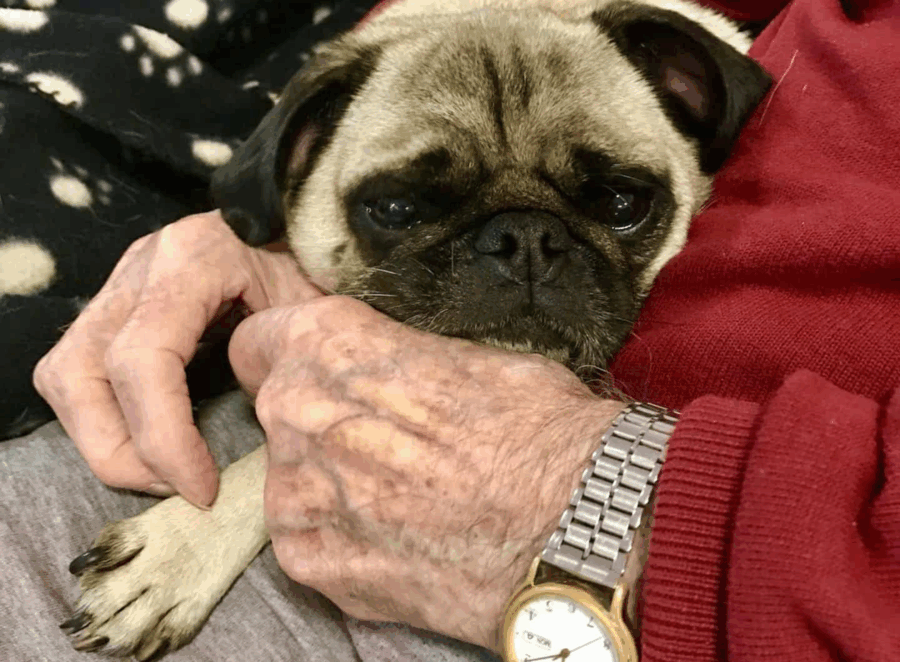
- Nursing Homes and Assisted Living Facilities: They stimulate memories, offer touch interaction, and ease loneliness among residents.
- Schools and Libraries: “Read to a Dog” programs utilize pugs to assist children in gaining confidence and enhancing literacy skills without any stress.
- Disaster Response and Crisis Situations: Therapy dogs serve as comfort to the survivors and first responders, rendering a moment of relief in the time of tragedy.
Conclusion
- Pugs demonstrate that greatness may be small in stature. Their natural empathy, unshakeable loyalty, and playful nature make them particularly well-suited to the therapeutic role of therapy dogs. In providing unconditional companionship, they mitigate human pain with a subtle yet powerful presence. The pug’s transformation from ancient lapdog to contemporary healer reinforces a fundamental reality: occasionally, the most effective therapy has a cold nose, a warm heart, and a reassuring snort.