Hamza Sajjad
Introduction: Why Your Pug Puppy’s First Vet Visit is Crucial
To take a Pug puppy home is an act of great joy, but the checkup begins with their initial visit to the vet. This important visit lays the groundwork for your Pug’s well-being in the long term and includes such things as vaccinations, protection against parasites, dietary suggestions ,as well as prevention of early diseases. So, in this ultimate tutorial, we will discuss all that you must know about the first Pug puppy visit to the vet so that you can be well prepared to provide a blessed beginning of life to your furry buddy.
1. When Should You Schedule Your Pug Puppy’s First Vet Visit?
Still, you should preferably take your Pug puppy to the veterinarian within 48-72 hours after coming home. This ensures:
Identification of congenital problems early (recurring in the brachycephalic breeds, such as Pugs).
The instant parasite examination (worms, ticks, fleas).
Formulation of a vaccination schedule.
Pro Tip: In case you had starting shots by your breeder or shelter, bring all health records to the vet.
2. What to Expect During the First Vet Visit
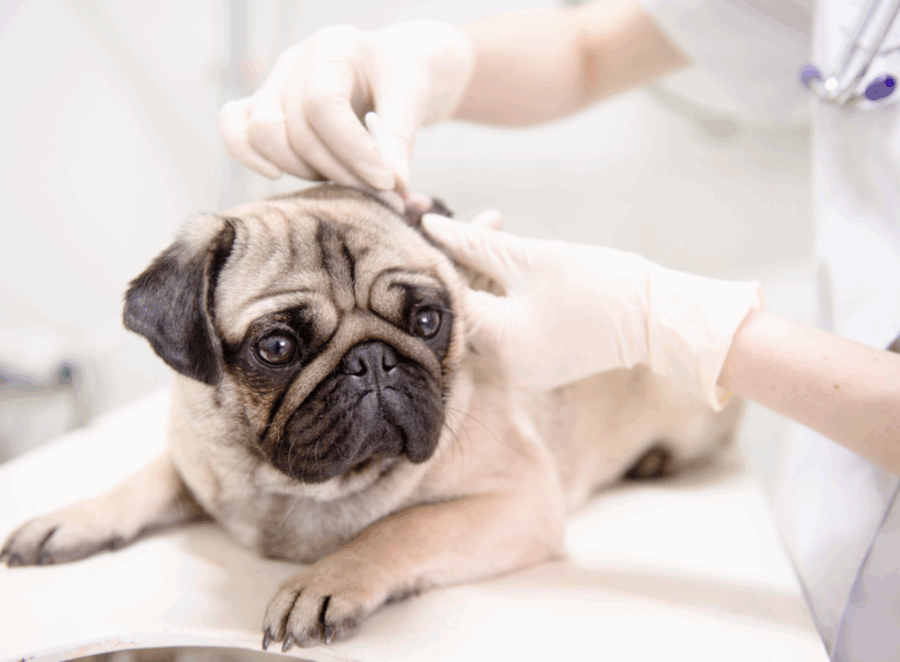
A. Physical Exam
The vet will undertake a complete body checkup comprising:
Weight & Body Condition – Pugs are at risk of becoming Overwhight; it is vital to monitor them early.
Eyes & Ears – Look at signs of infection (Pugs are prone to infections as they are wrinkly).
Heart sounds and Lungs – Heart sounds: Murmurs or discomfort due to rapid breathing (constantly with brachycephalic breeds).
Skin & Coat: Checking for an allergy or dermatitis.
B. Immunization Timetable
Your Pug puppy will require rabies Armored vaccines:
DHPP (Distemper, Hepatitis, Parvovirus, Parainfluenza ) – First shot at 6-8 weeks.
Rabies – usually administered between the ages of 12-16 weeks.
Bordetella ( Kennel Cough ) – Considered optional, but should be given if socially exposed at an early age.
C. Fecal Exam and Deworming
Puppies are usually affected by intestinal parasites (roundworms, hookworms). An early treatment is guaranteed by a fecal test.
D. Flea and Heartworm protection
Your veterinary doctor will prescribe:
Monthly preventatives (e.g, Heartgard, Nexgard).
Flea/tick prevention(Bravecto, Frontline).
E. Nutrition Advising
To prevent obesity, pugs require quality diets that are controlled in their portion sizes. Your vet may recommend:
Formulae which pertain to small-breed puppies (Royal Canin, Hill Science Diet).
Feeding regimes (3 -4 small meals/ day).
F. Microchipping and Spay/Neuter Discussion
Microchipping (preferably done early as a precaution).
Spay/Neuter schedule (normally 6 – 9 months in Pugs).
3. Common Health Issues to Watch for in Pug Puppies
As a result of their brachycephalic (flat-faced) facial physique, Pugs tend to:
Trouble breathing (Brachycephalic Obstructive Airway Syndrome-BOAS).
Eye problems (read dry eye, corneal ulcers).
Joint problems and hip dysplasia.
Infection of skin folds (stop wrinkles by washing them daily!).
With early veterinary care, problems can be detected while they are still at an early stage.
4. How to Prepare for the First Vet Visit
Carry medical reports[:2003](hyphen-oe2 ed testing t expensive t test).
Bring along a stool sample to check out the parasites.
Use a carrier that is safe to carry (Pugs are easily stressed).
Make questions (food, training, attitude).
5. Post-Visit Care & Follow-Up
- Follow the vaccination pattern.
Observing the reaction (sleepiness, vomiting post-injections).
Book a follow-up appointment (typically in 3-4 weeks when the booster is involved).
Conclusion: Your Pug’s Health Starts with the First Vet Visit
The first visit to the vet clinic is the most crucial one to take care of the Pug puppy, so that it could have a long and healthy life. Using this guide, you will be ready to deal with vaccination, parasite management, diet, and the prevention of diseases at their early stages. Vet appointment now, book it today, the future health of your Pug is at stake