Dr. Huzaifa Shayan (Veterinarian/ Deep Researcher)
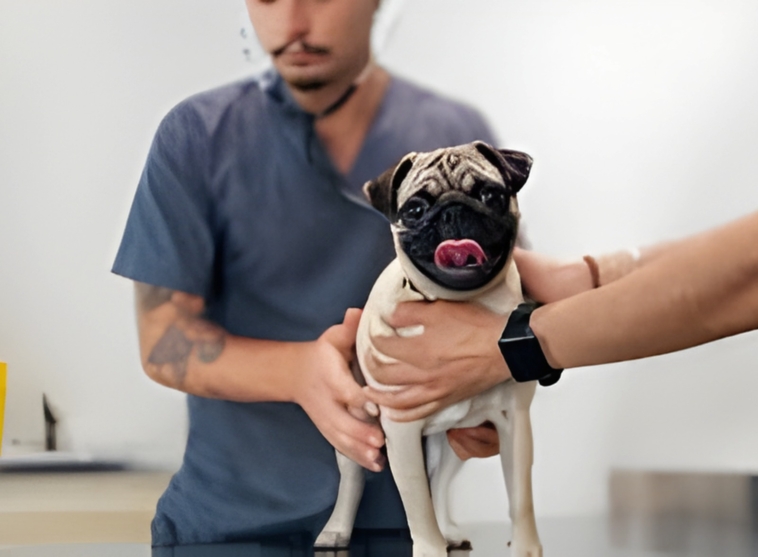
Pug Dog Encephalitis (PDE): Guide to Symptoms, Causes and Treatment.
The pug, which was in a healthy condition earlier, has a seizure. Changes in behavior manifest days or weeks later, they become confused, circle and press their head against walls. Your vet provides a name, of which you have never heard, Pug Dog Encephalitis. You are all at once confronted with one of the most heart-breaking diagnoses in the dog.
Pug encephalitis (PDE), a disease that is an inflammatory disease of the brain, is fatal and nearly exclusive to pugs. This is a non-curable, progressive neurological disease that is normally followed by euthanasia within a few weeks to months after. Although PDE is the nightmare of all pug owners, knowing this disease will help you know its symptoms at the earliest and make informed choices about diagnostic tests and give your dog the best possible care in the remaining time.
What Is Pug Dog Encephalitis?
Understanding the Disease (PDE)
Pug encephalitis is a serious inflammatory disease in which the system of immunity attacks the tissue of the brain. It is medically described as necrotizing meningoencephalitis (NME), which indicates the harsh inflammatory process that takes place in the tissue and membranes of the brain.
Key Characteristics:
- Gradual and eventually deadly.
- Mainly in pugs (young adults) between the ages of 6 months and 7 years.
- The majority of these occur between 2-3 years old.
- It was slightly more in females than in males.
- No cure currently exists
How PDE Damages the Brain
The disease causes:
- Meningitis (swelling of the brain and penis coverings).
- Brain death (necrosis) of tissue.
- Edema which raises the intracranial pressure.
- Disturbance of normal neurological functioning.
- Focal lesions in the entire brain.
The Uniqueness of Pugs Influence
Genetic Predisposition
Strong genetic components are responsible in causing PDE in pugs:
Hereditary Factors:
- Suspected auto recessive inheritance.
- Genetic markers at the dog chromosome 12.
- Some of those bloodlines are more prevalent.
- In breeding groups, family groups were recorded.
Breed Specificity:
Although it is referred to as Pug Dog Encephalitis, other times it affects:
- Maltese (most popular breed as a secondary one)
- Yorkshire Terriers
- Chihuahuas
- Other toy breeds (rare)
Nevertheless, pugs are by far the most affected breed with more than 80 percent of all cases.
Immune System Dysfunction
Autoimmune Mechanism:
- The immune system of the body attacks the brain tissue wrongly.
- T-cells invade brain and bring about inflammation.
- The response on immunity becomes self-sustaining.
- Just like human autoimmune encephalitis conditions.

Getting to know PDE in Dogs: Early and Progressive Symptoms
Initial Warning Signs
The initial encephalitis caused by pugs may have minor symptoms and may be overlooked:
Neurological Changes:
- Seizures (which is frequently the initial symptom that can be observed)
- Changes of behavior (confusion, disorientation)
- Personal transformation or temperament.
- Reduced awareness or alertness.
- Problem in identifying recognizable individuals or locations.
Physical Indicators:
- Hanging head against the walls or the furniture.
- Clumsy or stumbling of movement.
- Eyewitness issues (collision with objects)
- Abnormal head positioning
Progressive Symptoms
The symptoms progress with the disease:
Complicated Neurological Clinical:
- Repeat or recurring seizures.
- Loss of learned behaviors
- Inability to stand or walk
- Blindness
- Coma-like states
Behavioral Deterioration:
- Extreme lethargy or stupor
- Total housetraining incontinence.
- Aggression (uncharacteristic)
- It is characterized by constant crying or vocalization.
- Failure to identify family members.
Respondent: Are Pugs Seizure Prone?
Yes, it has been demonstrated that the seizure rates of pugs are greater than in most other breeds, and PDE is one of the largest reasons. PDE is not, however, always signaled by pug seizures:
Other Seizure Causes in Pugs:
- Non-paroxysmal kinesigenic dyskinesia (second most common)
- Low blood sugar levels (Hypoglycemia).
- Toxin exposure
- Brain tumors
- Liver disease
- Head trauma
Every seizure should be immediately taken to the veterinary to establish the reason.
Pug Dog Encephalitis Diagnosis
Diagnostic Challenges
The diagnosis of PDE eliminates other conditions:
Initial Testing:
- C-reactive protein and chemistry profile.
- Urinalysis
- Blood pressure measurement
- Infectious disease screening Infectious disease screening involves identifying potential infections and methods of prevention.
- Infectious disease screening Infectious disease screening is the detection of possible infections and prevention options.
Advanced Diagnostics – PDE
MRI (Magnetic Resonance Imaging):
- PDE diagnosis criteria in gold standard.
- Demonstrates typical lesions in the brain.
- Discovers patterns of inflammations.
- Determines place of damage and scope of damage.
The cerebrospinal fluid (CSF) was examined using the following methods:
- Collected via spinal tap
- Also has elevated white blood cells.
- Elevated protein levels
- Rules out infectious causes
Definitive Diagnosis:
- Brain biopsy/ necropsy (deceased)
- Characteristic changes in histopathology.
- Positively ascertains diagnosis.
Differential Diagnoses
The veterinarians should differentiate PDE and:
- Idiopathic epilepsy
- Brain tumors
- Viral encephalitis (infectious) is an illness characterized by inflammation of the brain caused by a virus, bacterium, fungus, or a complex of viruses and bacteria (viral-bacterial encephalitis).
- Bacterial encephalitis (infectious) Bacterial encephalitis is a disease of inflammation of the brain, caused by a virus, bacteria, fungus, or a virus-bacterium complex (viral-bacterial encephalitis).
- Hydrocephalus
- Toxicity
- Metabolic disorders
Therapeutic Interventions and Control
Current Medical Approach
Treatment of the disease has no cure; however, it serves to slow down its evolution and control symptoms:
Immunosuppressive Therapy:
Corticosteroids:
- Prednisone (the most prescribed one)
- Temporarily suppresses inflammation.
- Large doses in the beginning followed by a reduction.
- Is able to prolong life by several weeks up to months.
Additional Immunosuppressants:
- Cyclosporine
- Azathioprine
- Mycophenolate mofetil
- Administered along with steroids.
Seizure Management
Anti-Epileptic Drugs (AEDs):
- First-line treatment is phenobarbital.
- Potassium bromide
- Levetiracetam (Keppra)
- Zonisamide
Several drugs required to control seizures.
Supportive Care
Quality of Life Measures:
- Pain management
- Nutrition (hand feeding should hand be needed).
- Mobility assistance
- Maintaining hydration
- The prevention of pressure sores in recumbent dogs.
Realistic Prognosis
Survival Times:
- Untreated: Days to weeks.
- With violent treatment: Weeks to months (average 3-6 months)
- Rare cases: Up to 1-2 years
The quality of life is lowered gradually with or without treatment.
Mistakes and Misconceptions
First seizure Delay in Veterinary Care:
-
Veterinary assessment is necessary immediately in case of any seizure. Even though early diagnosis and early initiation of treatment is not curative, it will help you spend more quality time with your pug.
PDE/All Seizures:
-
Most of the pug seizures are due to idiopathic epilepsy- a treatable long term illness. Do not diagnose the most dreadful without due diagnostics.
Active Treatment without a Knowledge of Prognosis:
-
PDE is a slowing down but not a curing treatment. Know practical results to expect until committing to intensive interventions particularly when the quality of life drops at an alarming rate.
Breeding Affected Dogs or their Family:
-
Taking the genetic factor into consideration, pugs that have been genetically affected and their immediate family members should not be bred. Good breeders eliminate complete lines of breeding programs.
Not recording Family History:
-
In case your pug acquires PDE, alert your breeder and other owners of other dogs of the same kind. This data can be used to make wise choices by breeders.

Making Difficult Decisions – PDE
Quality of Life Assessment
Markers Treatment No Longer Seems Appropriate:
- Inappropriate uncontrolled seizures despite numerous drugs.
- Ambulatory deficiency or loss of locomotion.
- Complete blindness
- Inability to eat or drink
- Constant verbalization implying pain or apparent distress.
- Denies any family member recognition.
- Loss of consciousness
End-of-Life Considerations – PDE
When to Consider Euthanasia:
- Life standards are at an unbearable level.
- More bad days than good, your pug.
- Benefits are overridden by side effects of treatment.
- Your pug demonstrates its misery.
A lot of owners opt in a humane euthanasia when they are yet to deteriorate severely before dignity is lost and suffering is caused.
Frequently Asked Questions PDE
Q: Can PDE be prevented?
There is none of the prevention now. The knowledgeable breeding behavior that does not involve the affected dogs and close relatives in breeding programs is the only way the incidence can reduced. Genetic testing is in the process of development, and it has not reached the commercial level yet.
Q: Is it necessary to have an MRI on my pug every time he has a seizure?
Not necessarily. In case your pug experiences one isolated seizure that you know he is okay, your veterinarian might suggest the use of monitoring. MRI is, however, essential in diagnosis in case of recurrence, worsening, or other neurological symptoms.
Q: Can PDE infect other dogs or people?
No. PDE is not an infectious disease, but an autoimmune one. A pug with PDE is not dangerous to the other pets and family members.
Q: PDE diagnosis and treatment- What is the cost?
MRI typically costs $1,500-$3,000. CSF analysis adds $300-$800. Monthly drugs cost between 100 and 500 dollars based on the regimen. Diagnostic expenses to end-of-life care cost may be over $5,000- 10,000.
Q: I should still get a pug or not?
About 1-2% of the pugs have the PDE and therefore the majority of the pugs do not develop this disease. Buy the breeders with reputable status that breed stock are screened and have health records. Take pet insurance as an example of one that covers neurological conditions.
Moving Forward With Compassion – PDE
One of the most inhuman diseases that afflict this pet breed is the pug dog encephalitis. Emotional devastation of PDE diagnoses associate with the progressive nature, young age of onset, and dreadful outcome of the disease because the diagnosis has left the owner with time to develop memories with their companions.
Consultation in a veterinary is necessary in case the pug displays any neurological signs. PDE is an incurable disease and early diagnosis enables you to make informed choices regarding the treatment, prepare emotionally and make the most of the time left together.
To the families of whose pugs are diagnosed with PDE, it is important to know that making a decision of compassionate euthanasia in a condition where the quality of life has gone down is a last show of love- not a failure. Comfort and dignity should be the overriding principles in making all decisions in the journey of heartbreak.
The veterinary community is still conducting studies on PDE in an effort to come up with improved treatment and finally, a cure. Until it is otherwise, we are left with our best weapon, which is awareness and early detection and humane care to help the pugs and the loving families endure this awful disease.