Hamza Sajjad
Introduction
Pug puppies are fun and cute and active, and at the same time, have a place where they can rest and feel comfortable. House training, safety of the Pug puppies, and avoiding destructive behavior can only be achieved through designing a good crate setup. This guide teaches you all you need to know, including which crate to choose a crate, accessories, how to train your dog, and mistakes never to make.
At the bottom of this article, you will be able to know exactly how to make the most optimum crate space in which you can keep your Pug puppy happy and safe, and increase your website’s traffic with highly optimized SEO.
Why a Proper Crate Setup is Crucial for Pug Puppies
One of the most effective methods of training is:
Speed potty training (Pugs are stubborn!
Avert separation anxiety
Ensure that your puppy is safe when left alone
Make a habit of sleeping and restfulness
A poorly established crate may also result in stress, whining, and resistance, and therefore, it is essential to do it right at the very beginning!
Step 1: Choosing the Best Crate for Your Pug Puppy
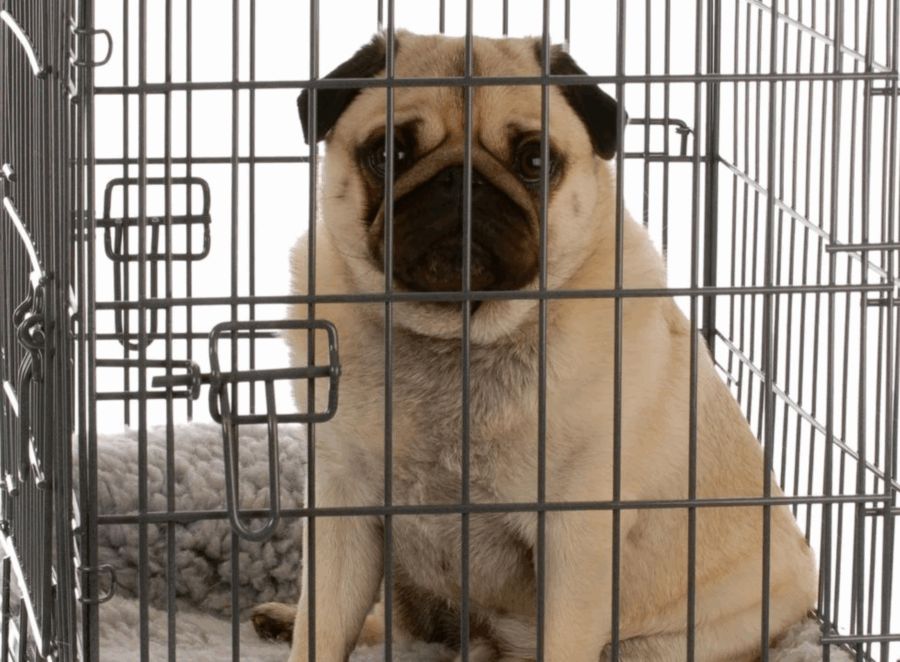
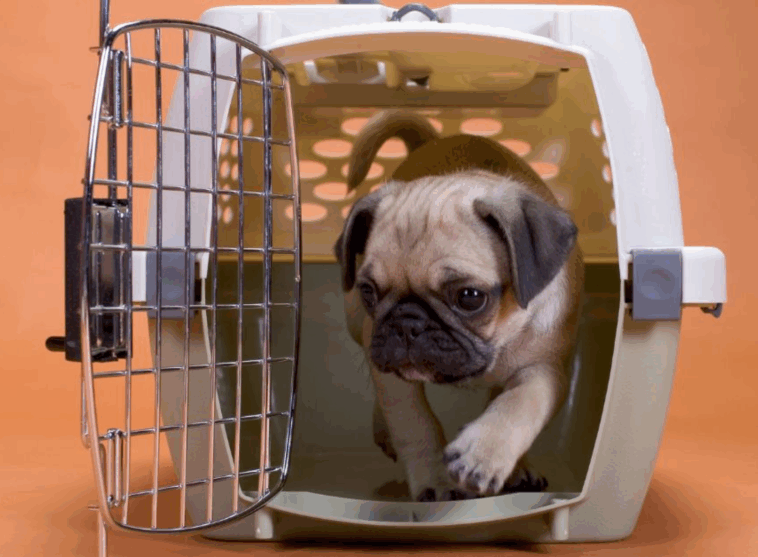
1.1 What is the nature of the crate, wire, plastic, or soft-sided?
Wire Crates (Best Ventilation and long life)
Plastic Crates (Travelling Friendly and den-like)
Soft-sided crates (Lightweight and not chew-proof)
Most appropriate for Pugs: A wire crate with a divider, no matter how fast Pugs grow.
1.2 Right crate size
Puppy stage-(8-12 weeks)- 24″L x 18″W x 19″H
Adult Pug 30“In L x 19“In W x 21“In H
Pro Tip: A divider will help to create space as your Pug grows.
1.3 What You Need to Have in A Crate
Removable tray (formerly easy cleaning)
Two-door style (better accessibility)
Fodable travel
Step 2: Setting Up the Perfect Crate Interior
2.1 Bedding: It is All about Comfort!
Orthopedic foam pad (joint supports)
Washable blankets, Machine washable, preferably (Pugs shed a lot!
Do not use fluffy beds (puppies can chew and eat the stuffing)
2.2 Basic Crate Accessories
Chew-proof water dispenser
Interactive toys: Kong with peanut butter
Snuggle puppy (anti-Out of control
2.3 temperature & ventilation
Pugs get hot: crate:
Out of the direct sun, beanies
In a good, well-ventilated place
Using a cooling mat during the summer season
Step 3: Crate Training Your Pug Puppy (Fast & Stress-Free)
- 3.1 Creating a positive launch of the Crate
Treats & praise should be used to make them positive
Great food in the crate
Begin with short-term sessions (5-10 mins)
3.2 Tricks to Avoid
Punished for employing the crate
Whining (leads to bad habits) is ignored
Spending too much time leaving the puppy alone (no more than 3-4 hours with a young Pug)3.3 Crate Routine at night
Right before bed, last potty break
White noise machine to calm the stressor
Wrap the crate halfway to have a den-like sensation
Step 4: Troubleshooting Common Crate Issues
4.1 My Pug Puppy is Full of Hate with the Crate!
Try a softer Mattress
High-value food (chicken, cheese)
Slowly add crates to the time assigned
4.2 Whining or Barking too much
Disregard seeking attention whines
Make sure they get some exercise
Make sure it is not too hot / too cold.
Final Thoughts: A Happy Pug = A Well-Designed Crate!
An ideal crate arrangement of a Pug puppy will be safe, comfortable, and will quicken the training. With this guide, you will lessen stress load (your, as well as your pup) and develop a powerful routine.
Need some more Pug-care tips? Save this page and bookmark it and share it with Pug lovers to increase traffic and interaction